Focus on Aveiro: a field visit by the Climate-Adapt4EOSC consortium to Portugal’s atlantic coast
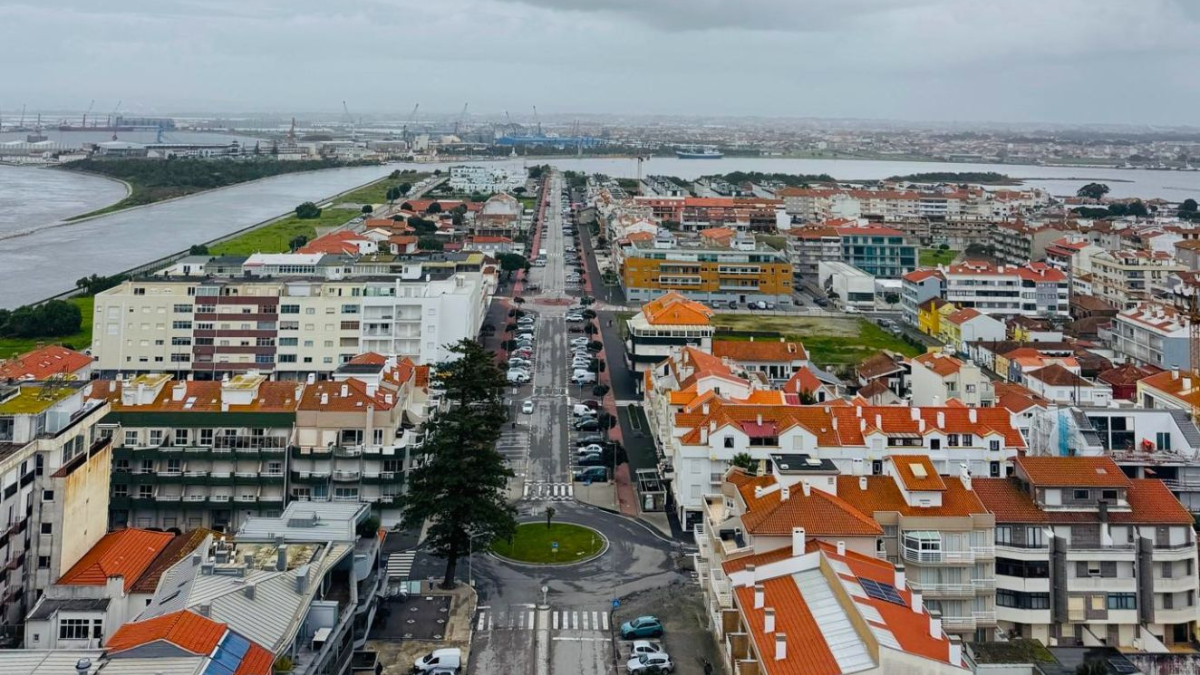
Located on Portugal’s Atlantic seaboard, Aveiro stands out for the richness of its natural environments and the intensity of the climate-related pressures affecting its territory. The city and its surroundings host numerous protected areas, supported by national environmental and coastal management plans designed to preserve sensitive ecosystems while strengthening territorial resilience in the face of accelerating climate change.
Within the framework of the Climate-Adapt4EOSC project, the consortium carried out an on-site field visit to Aveiro, a dynamic coastal city of more than 80,000 inhabitants. This visit provided a concrete illustration of the climate risks currently affecting Atlantic territories, particularly those linked to coastal erosion, extreme marine events and sea level rise.
Aveiro within the Climate-Adapt4EOSC use cases
Aveiro is located in Portugal’s Centro Region, which constitutes Use Case 2 of the Climate-Adapt4EOSC project. In parallel, the Port of Aveiro acts as one of the replicators of Use Case 1. This dual positioning demonstrates how climate adaptation tools, data and methodologies developed within the project can be transferred, tested and scaled across different territorial and sectoral contexts, from urban coastal areas to strategic economic infrastructures.
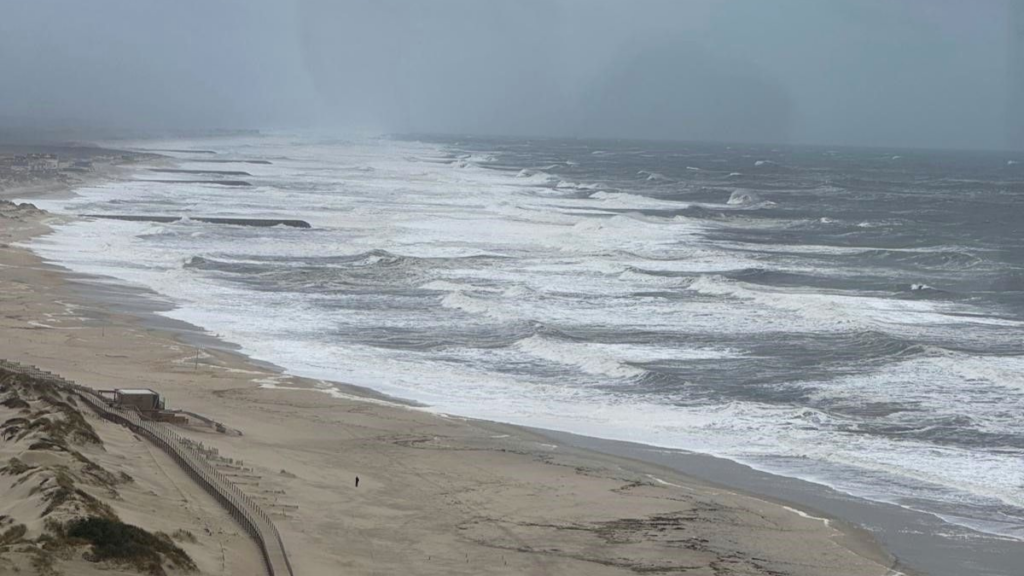
Observing coastal erosion and extreme marine dynamics at Vagueira Beach
The visit began at Vagueira Beach, where participants were able to directly observe the effects of strong wave action and violent swells. Coastal erosion represents a major challenge in this area, prompting the implementation of several hard engineering measures, including stone retaining walls, to protect buildings and seaside infrastructure from recurrent storm surges. On the day of the visit, particularly windy conditions caused seawater to reach the promenade, offering a striking illustration of the growing exposure of coastal zones to extreme marine events and the limits of existing protective infrastructures under worsening climatic conditions.
Costa Nova: cultural heritage and climate vulnerability
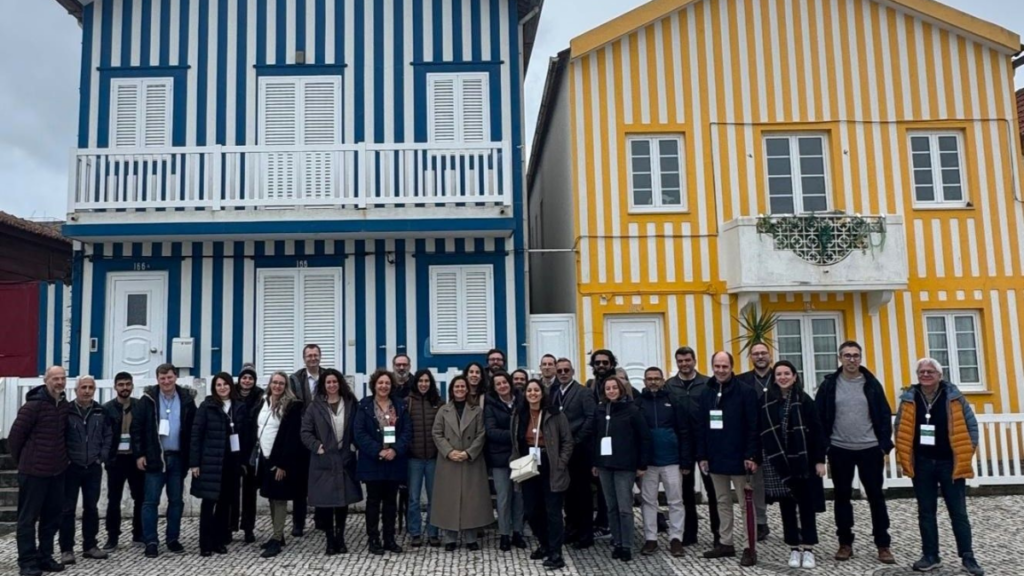
The field visit then continued to Costa Nova, internationally renowned for its iconic striped houses, known as palheiros, which are emblematic of the region’s maritime heritage. Beyond their cultural and architectural value, these low-lying coastal neighbourhoods clearly highlight the vulnerability of inhabited areas to sea level rise, flooding and shoreline retreat. Costa Nova exemplifies the complex challenge faced by coastal territories: preserving cultural identity and tourism attractiveness while adapting to increasingly frequent and intense climate hazards.
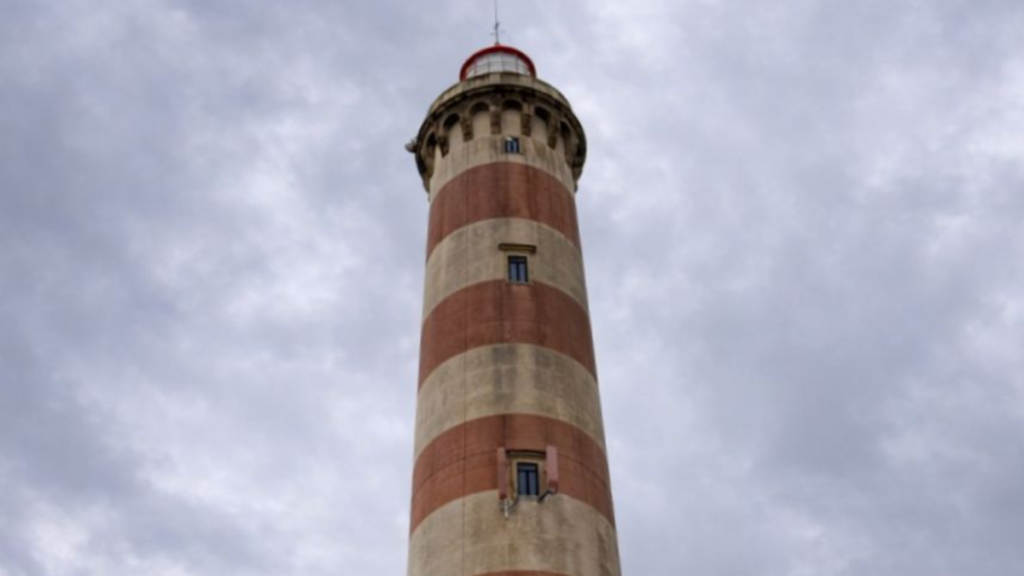
A strategic overview from the Barra Lighthouse
With the support of on-site staff, participants were able to climb the Barra Lighthouse, the tallest lighthouse in Portugal. From its summit, the panoramic view offered a comprehensive overview of the Atlantic coastline, the Ria de Aveiro lagoon system and the surrounding port area. This vantage point clearly illustrated the close interconnections between natural ecosystems, urban development and economic activities, as well as the systemic nature of climate risks affecting the territory.
Climate risks and adaptation at the Port of Aveiro
The visit concluded with an overview of the Port of Aveiro, a strategic infrastructure that plays a central role in regional economic development. In recent years, the port has benefited from significant investments in logistics, accessibility and modernisation. At the same time, it is increasingly exposed to climate-related risks, including sea level rise, increased storm intensity and evolving sediment dynamics, which directly affect port operations, infrastructure resilience and long-term planning.
Strengthening evidence-based coastal adaptation
Overall, this field visit highlighted the importance of combining high-quality climate data, local observations and decision-support tools to better deal with climate adaptation challenges.
To stay informed about future updates, subscribe to the YouTube channel. You can also follow project updates via our LinkedIn.