Highlights from the FAIR2Adapt General Assembly and joint TWG activities with Climate-Adapt4EOSC project
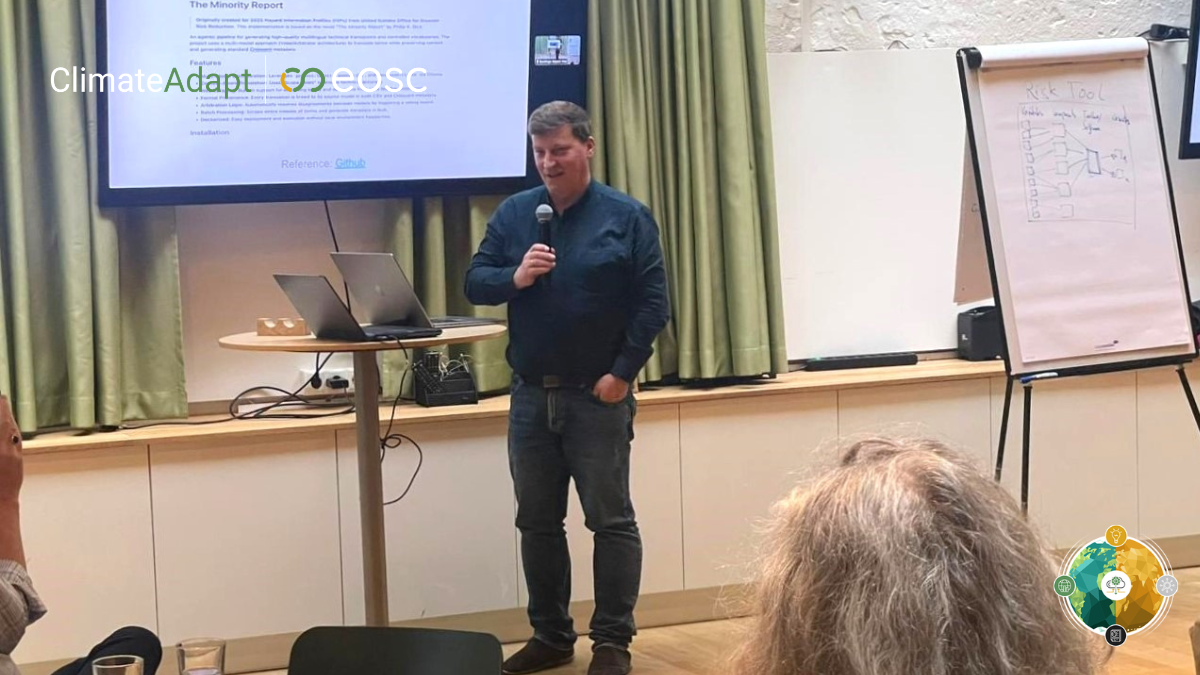
From 23 to 25 March 2026, partners of the FAIR2Adapt project gathered in Vienna for their General Assembly, a key milestone to review progress, consolidate results and advance collaborative work on climate adaptation. Beyond internal coordination, this meeting also provided a strategic opportunity to reinforce synergies with the Climate-Adapt4EOSC project through dedicated joint activities, including a Thematic Working Group (TWG) session.
A General Assembly focused on collaboration and impact
The FAIR2Adapt General Assembly brought together project partners to exchange on recent achievements and ongoing developments, particularly in relation to the implementation of FAIR (Findable, Accessible, Interoperable, Reusable) principles in the field of climate adaptation.
Discussions focused on the project’s efforts to:
- Improve access to and interoperability of climate adaptation data;
- Develop tools and services supporting evidence-based decision-making;
- Advance case studies, including the development of dashboards at city-quarter level;
- Harmonise heterogeneous datasets, such as flood risk data, into integrated and actionable formats.
The presence of several Climate-Adapt4EOSC representatives further reinforced the collaborative dimension of the event. Building on previous exchanges, including participation in the Climate-Adapt4EOSC General Assembly in Portugal, the Vienna meeting enabled both projects to deepen their alignment and identify new areas for cooperation.
Advancing joint work through the Thematic Working Group
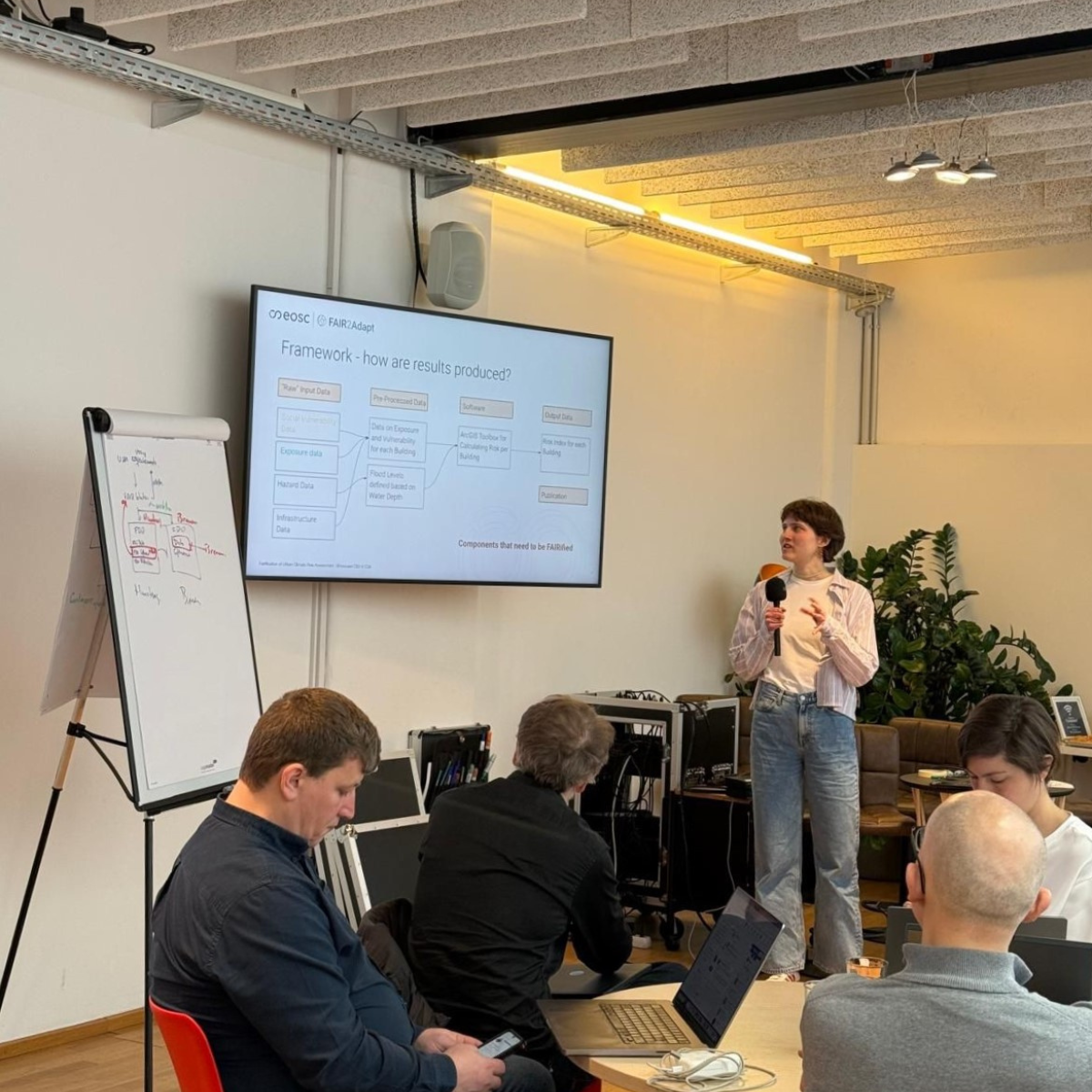
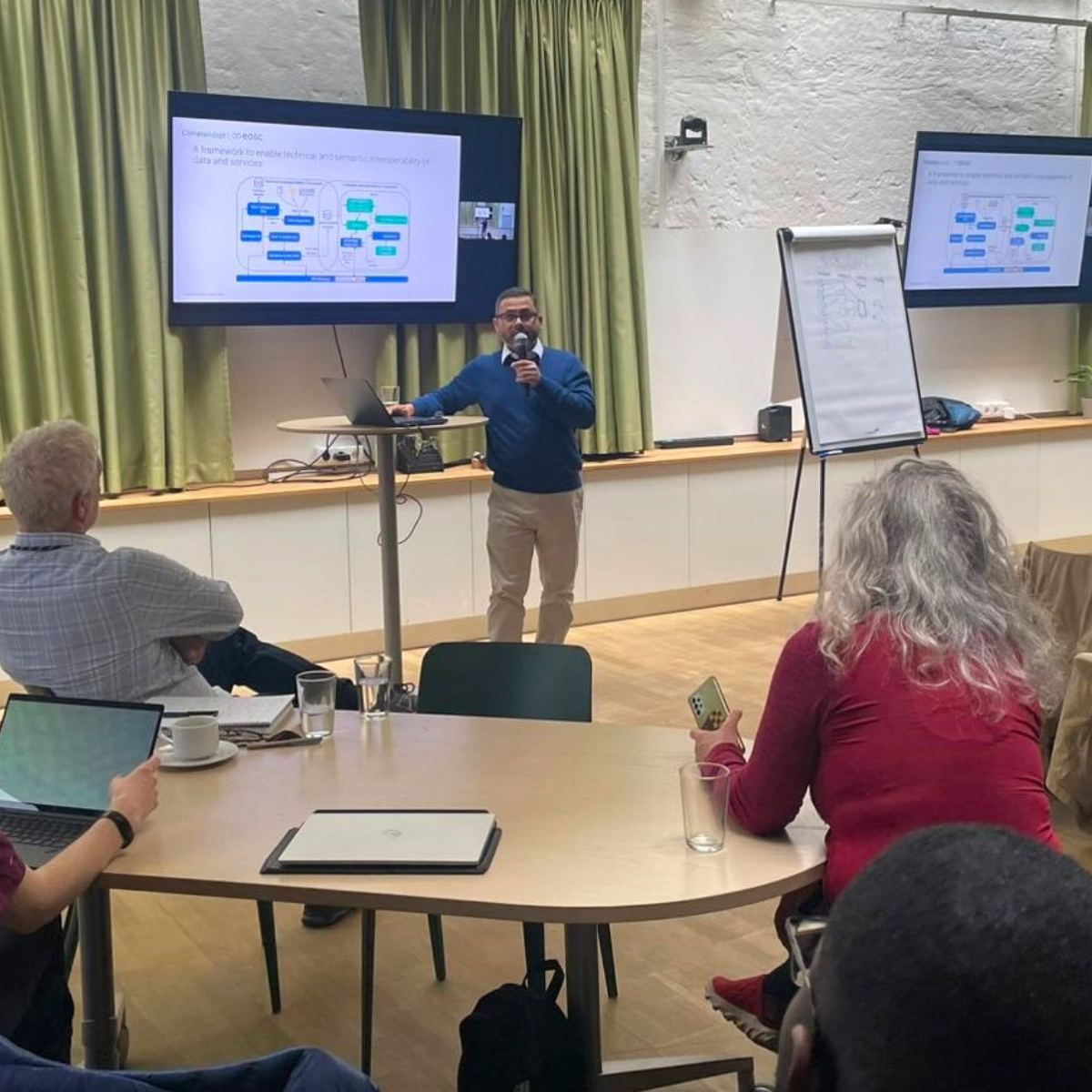
A central moment of this collaboration was the second Thematic Working Group (TWG) meeting, held on 24 March 2026 in a hybrid format and co-organised with the EU Mission on Adaptation to Climate Change. The session gathered more than 35 participants, reflecting strong engagement across the community.
The TWG was co-led by Dr Mohammad Azizur Rahman (from TVS), and structured to foster both strategic discussion and practical collaboration. Contributions from Climate-Adapt4EOSC partners, including experts from the University of Cambridge (Feroz Farazi) and CODATA (Slava Tykhonov), supported knowledge exchange on key methodological and technical aspects.
The session focused in particular on:
- Approaches for documenting FAIR Supporting Resources;
- The role of standards, metadata and ontologies in enhancing data interoperability;
- Demonstrations of emerging tools and solutions.
This joint working session represents an important step towards building a shared framework for FAIR climate data, aligned with the objectives of both projects and the broader EU Mission on Adaptation to Climate Change.
Exploring AI-driven solutions for climate research
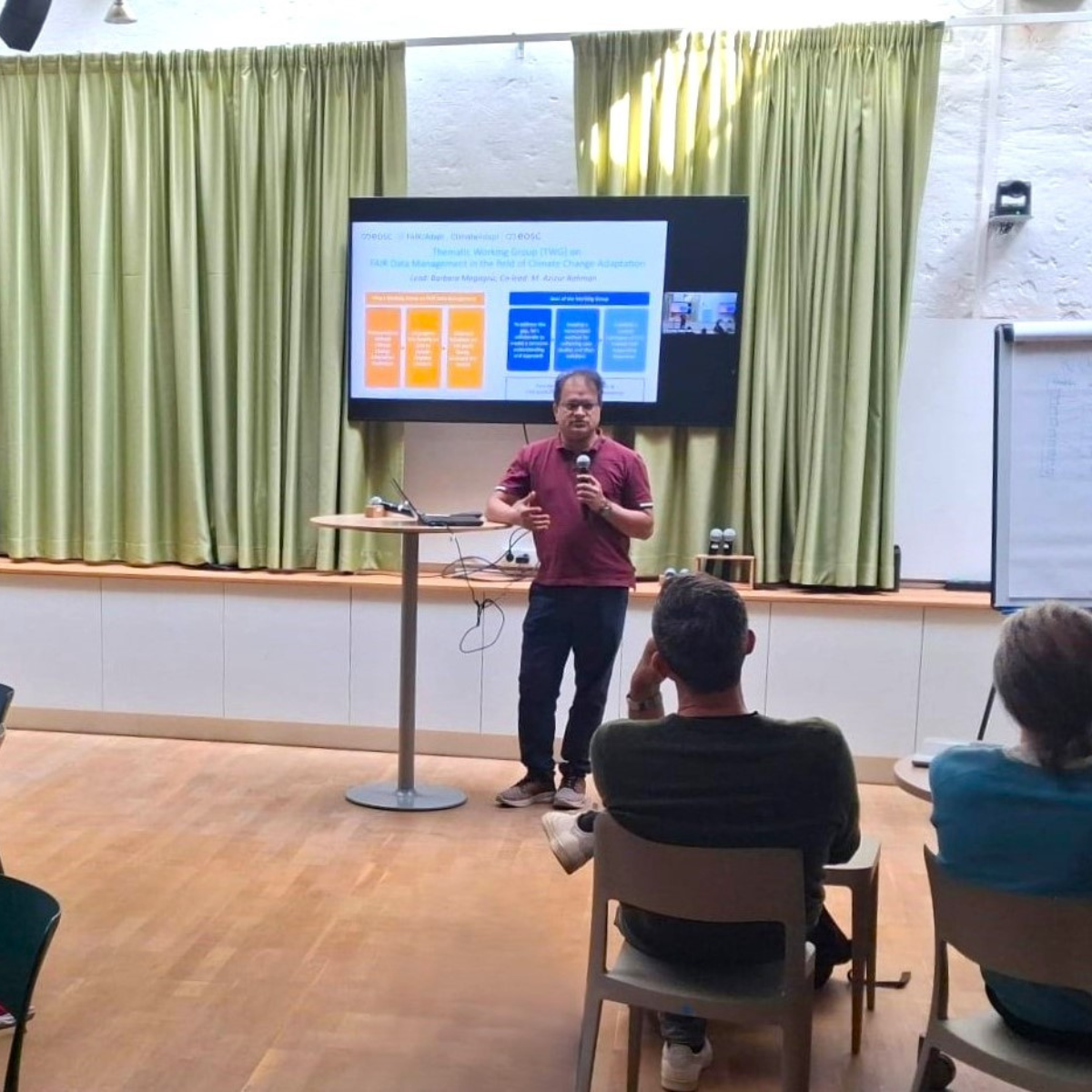
Beyond discussions, the Vienna meetings also enabled the presentation of advanced technical developments illustrating the potential of artificial intelligence in climate research.
Among the outcomes, partners showcased prototypes integrating AI-powered knowledge graphs, semantic technologies and large language models to support the verification and contextualisation of climate-related scientific claims. These tools rely on structured metadata, including CDIF variables and Croissant formats, to ensure that claims can be systematically linked to supporting datasets.
In parallel, significant progress was made in the development of an AI-powered data exchange layer between FAIR2Adapt and Climate-Adapt4EOSC. This includes:
- The synchronisation of research outputs between platforms such as RO-Hub and Dataverse;
- Automated packaging and transfer of RO-Crate datasets;
- The integration of FAIR-compliant access and usage policies (e.g. ODRL);
- The use of persistent identifiers and provenance information to ensure traceability and trust.
These developments contribute to the emergence of an “AI-ready” data ecosystem, combining semantic, technical and organisational interoperability, while strengthening data governance and sovereignty.
Towards a shared, FAIR and interoperable data ecosystem
The joint activities carried out during the General Assembly highlight the increasing convergence between FAIR2Adapt and Climate-Adapt4EOSC. By aligning methodologies, tools and infrastructures, both projects contribute to building a more coherent and interoperable European landscape for climate adaptation data.
The TWG, in particular, plays a key role in structuring this collaboration by providing a platform for continuous exchange between projects, stakeholders and initiatives involved in FAIR data practices.
Conclusion
The FAIR2Adapt General Assembly in Vienna confirmed the importance of collaboration in addressing the complexity of climate adaptation challenges. Through strengthened synergies with Climate-Adapt4EOSC and the advancement of joint technical developments, the event marks a significant step towards more integrated, transparent and actionable climate data ecosystems.
These efforts ultimately support the transition from fragmented data landscapes to shared infrastructures capable of informing effective climate adaptation strategies at local, national and European levels.
To stay informed about future updates, subscribe to the YouTube channel. You can also follow project updates via our LinkedIn.